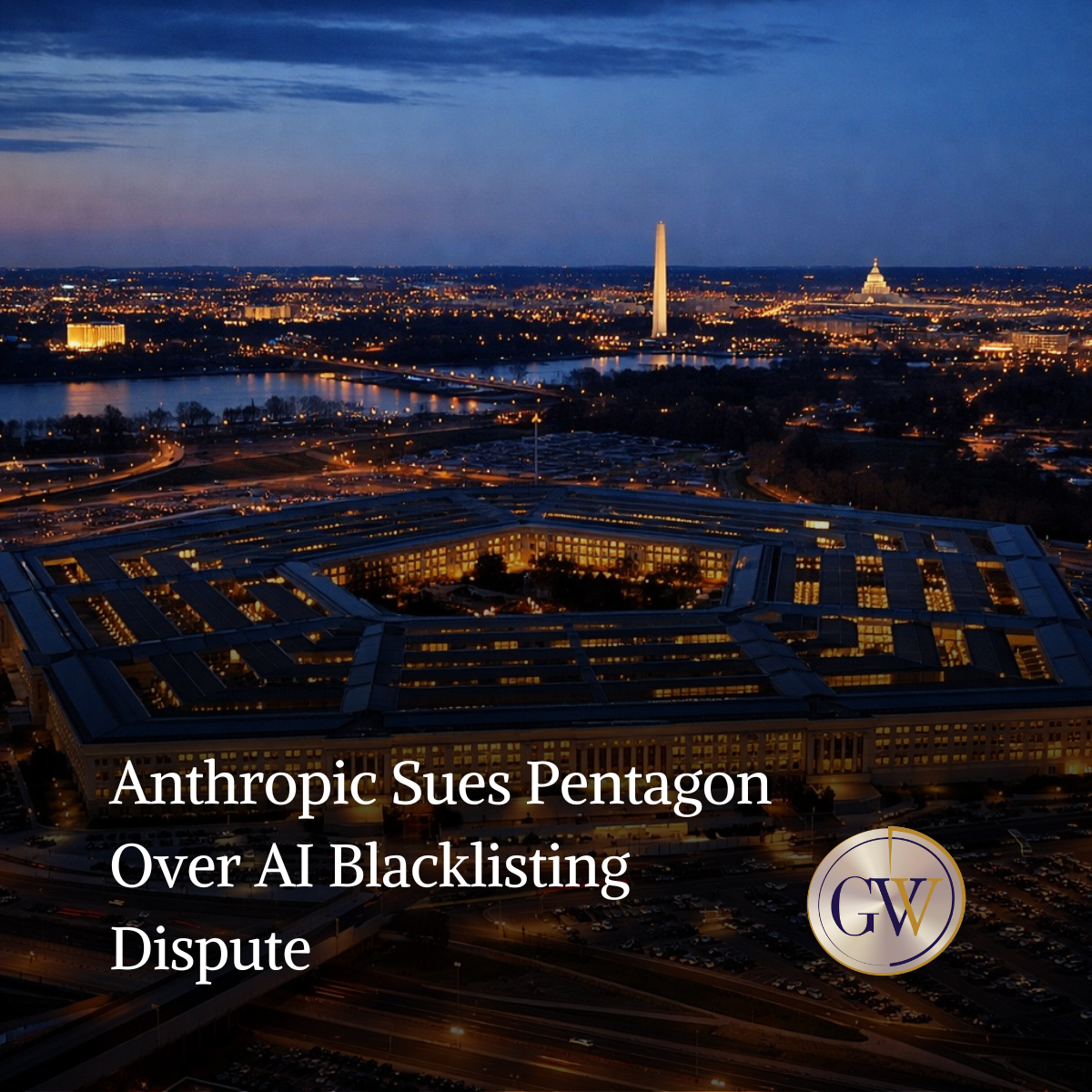
Artificial intelligence company Anthropic has filed a lawsuit against the U.S. Defense Department seeking to overturn a designation that labels the firm a “supply chain risk,” a move that effectively blocks it from Pentagon contracts and cooperation with defense contractors.
The lawsuit, filed in federal court, challenges a decision by the Pentagon that Anthropic says unfairly restricts its ability to do business with the U.S. government and defense-related entities. The company argues the designation was imposed without sufficient justification and could significantly damage its commercial prospects.
According to the complaint, the dispute stems from Anthropic’s policies governing how its AI models can be used. The company has placed restrictions on certain military and surveillance applications of its technology, including uses it believes could contribute to autonomous weapons or domestic monitoring systems.
Pentagon officials have not publicly detailed the reasoning behind the supply chain risk classification, but such designations are typically applied when the government believes a company’s technology or operational practices could pose national security concerns.
Anthropic, founded in 2021 by former OpenAI researchers and backed by major technology investors, has become one of the leading developers of advanced AI systems. Its flagship model, Claude, is widely used by businesses and software developers for enterprise and productivity applications.
The legal challenge highlights growing tension between private AI companies and governments as artificial intelligence becomes increasingly central to defense, intelligence, and cybersecurity strategies. As military agencies expand their use of advanced computing and automation, questions surrounding oversight, ethical boundaries, and private-sector participation are becoming more prominent.
The outcome of the case could shape how AI developers interact with government agencies and defense contractors in the years ahead, potentially influencing procurement rules and the regulatory environment governing advanced technologies.