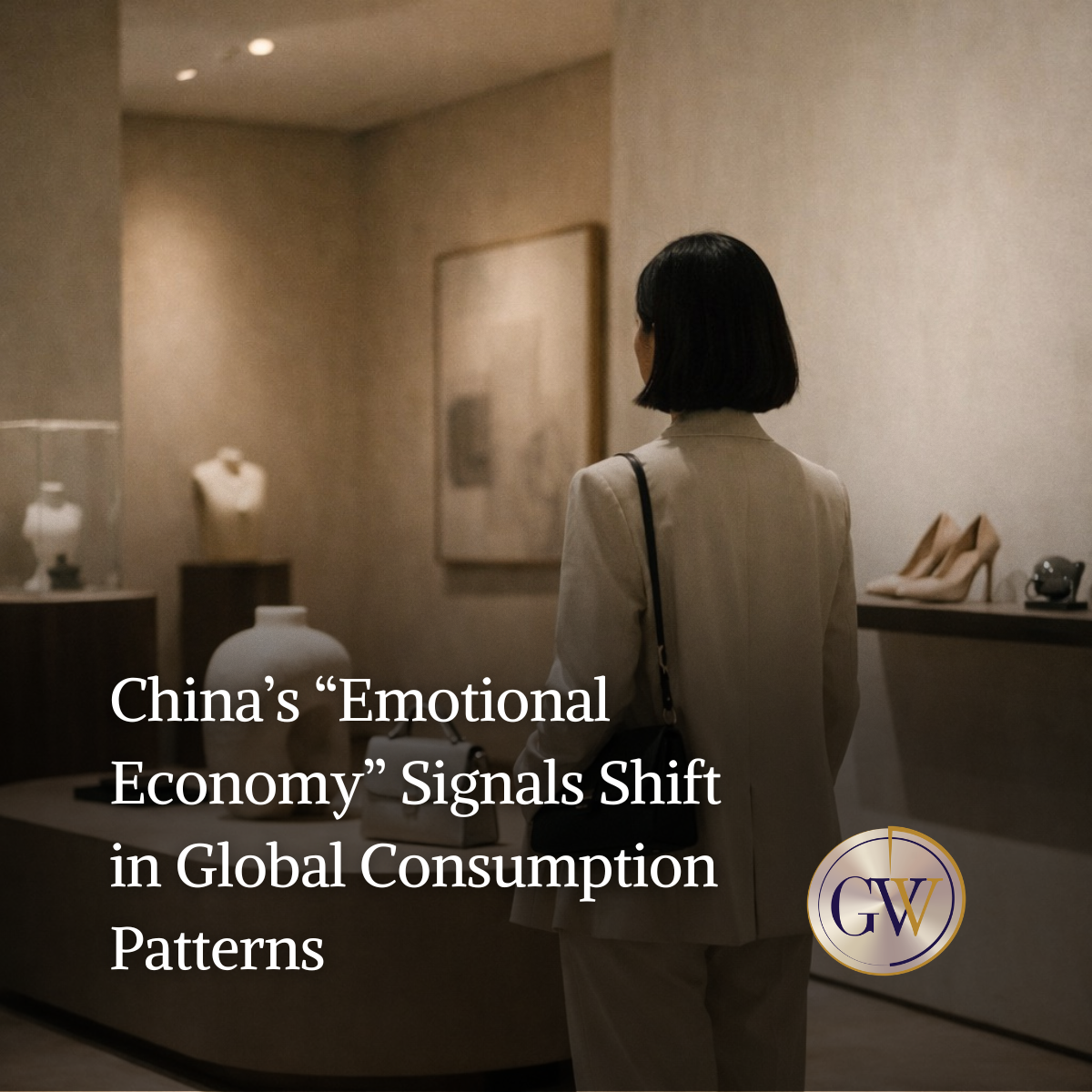
China’s “Emotional Economy” Signals Shift in Global Consumption Patterns
A new consumption trend in China, described as the “emotional economy,” is gaining momentum as consumers increasingly prioritize products and experiences that deliver personal meaning, identity, and psychological satisfaction.
The shift reflects a broader transition in China’s domestic economy, where spending is moving beyond functional needs toward emotionally driven purchases. Analysts note that younger consumers in particular are fueling demand for goods and services tied to self-expression, community, and experiential value, rather than price or utility alone.
The trend is emerging as policymakers continue efforts to stimulate domestic consumption amid uneven economic growth and a prolonged property slowdown. By encouraging new categories of demand—ranging from cultural products to lifestyle experiences—the “emotional economy” is increasingly viewed as a potential driver of future consumption expansion.
For global brands and investors, the shift signals a deeper structural change. Competition is moving away from product differentiation toward the ability to create emotional resonance, brand identity, and long-term consumer engagement. Industry research suggests that purchasing decisions are increasingly influenced by narrative, community, and perceived personal alignment rather than traditional value metrics.
The development also highlights a broader global pattern: as income levels rise and digital ecosystems mature, consumption is becoming more experience-oriented and psychologically driven. In China, however, the scale and speed of this transition position it as a leading indicator for how consumer behavior may evolve across other major markets.