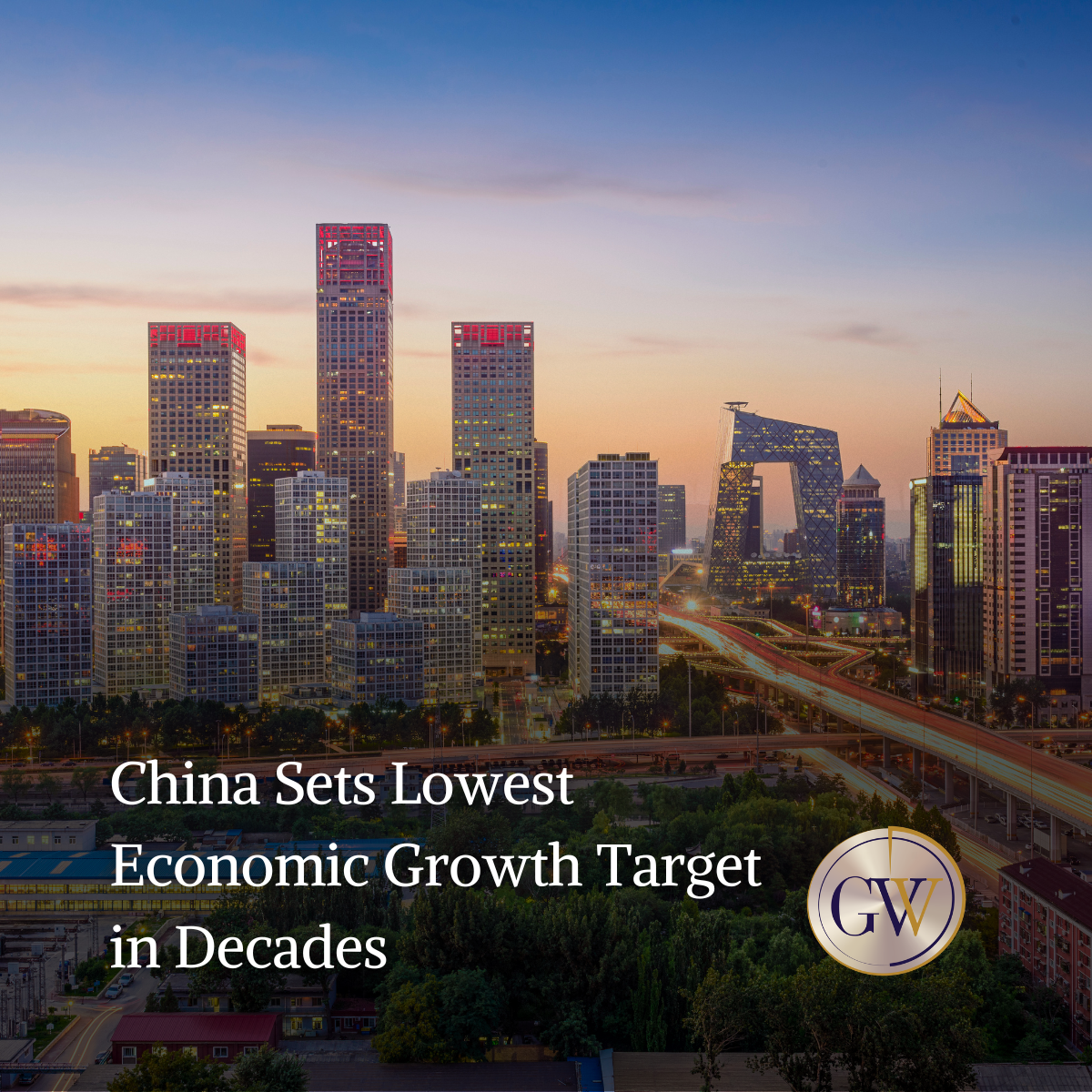
China has set its economic growth target for 2026 at between 4.5 percent and 5 percent, marking the lowest official benchmark in more than three decades and signaling a shift toward slower but more structurally focused economic expansion.
The target was announced at the opening of the National People’s Congress in Beijing, the annual meeting where China’s leadership outlines key economic priorities and policy direction for the year. It is the first time since 1991 that the government has placed its official growth target below the 5 percent threshold.
Financial markets closely monitor the annual growth benchmark because it offers insight into the expectations and policy priorities of China’s leadership, including President Xi Jinping, within the country’s highly centralized economic system.
Economists widely expected the lower target, interpreting it as a signal that policymakers are willing to tolerate slower short-term growth while addressing deeper structural challenges. China’s economy has faced mounting pressures in recent years, including persistent deflationary pressures, high youth unemployment, weak consumer confidence, and a prolonged downturn in the property sector.
At the same time, China’s manufacturing sector remains a major engine of growth. The country has invested heavily in electric vehicle production, industrial parks, and advanced technology sectors, with companies such as BYD emerging as global leaders in electric vehicle manufacturing.
However, heavy reliance on manufacturing has created excess capacity and intensified competition across industries, driving down prices and profit margins. Policymakers are increasingly emphasizing what officials describe as “high-quality growth,” prioritizing advanced sectors including artificial intelligence and advanced manufacturing.
To support the economy, the government indicated its central budget deficit will be around 4 percent of GDP, signaling continued fiscal support as leaders attempt to stabilize growth while transitioning toward a more consumption-driven economic model.
The new growth target suggests Beijing is preparing for a period of structurally slower expansion as the economy matures, even as officials attempt to rebalance growth toward domestic demand and technological innovation.