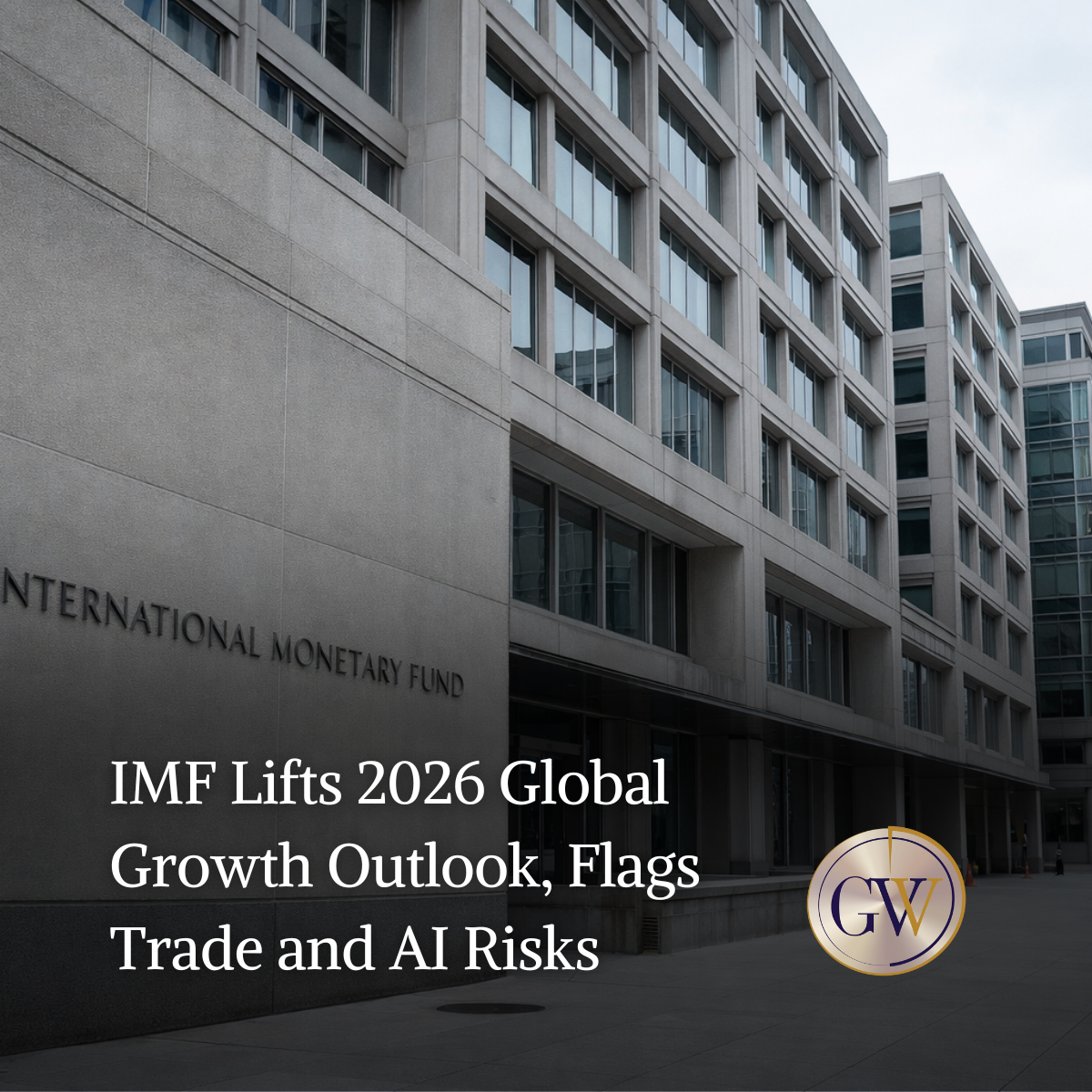
IMF Lifts 2026 Global Growth Outlook, Flags Trade and AI Risks
The International Monetary Fund raised its global growth forecast for 2026, pointing to stronger-than-expected economic resilience while warning that trade tensions and uncertainty surrounding artificial intelligence remain significant risks.
In its January update to the World Economic Outlook, the IMF said global economic growth is now projected at around 3.3% in 2026, a modest upward revision from its previous forecast. The Fund also expects growth to remain broadly stable in 2027, supported by easing inflation, steady labor markets, and continued investment in technology.
The IMF said inflation has continued to decline across most advanced economies, allowing central banks to begin shifting away from aggressive tightening. While monetary policy remains restrictive in many jurisdictions, the Fund noted that financial conditions have stabilized and that the risk of a sharp global slowdown has receded.
At the same time, the IMF highlighted several areas of vulnerability. It warned that renewed trade restrictions and geopolitical fragmentation could weigh on global growth, particularly for export-oriented economies. The Fund also cited uncertainty around the long-term productivity impact of artificial intelligence, noting that while investment has accelerated, its broad economic effects remain uneven.
Emerging markets and developing economies are expected to grow faster than advanced economies, though the IMF said higher borrowing costs and currency pressures continue to pose challenges for countries with elevated debt levels.
The IMF said the outlook underscores the importance of maintaining policy coordination, safeguarding financial stability, and avoiding measures that could further fragment global trade and investment flows.