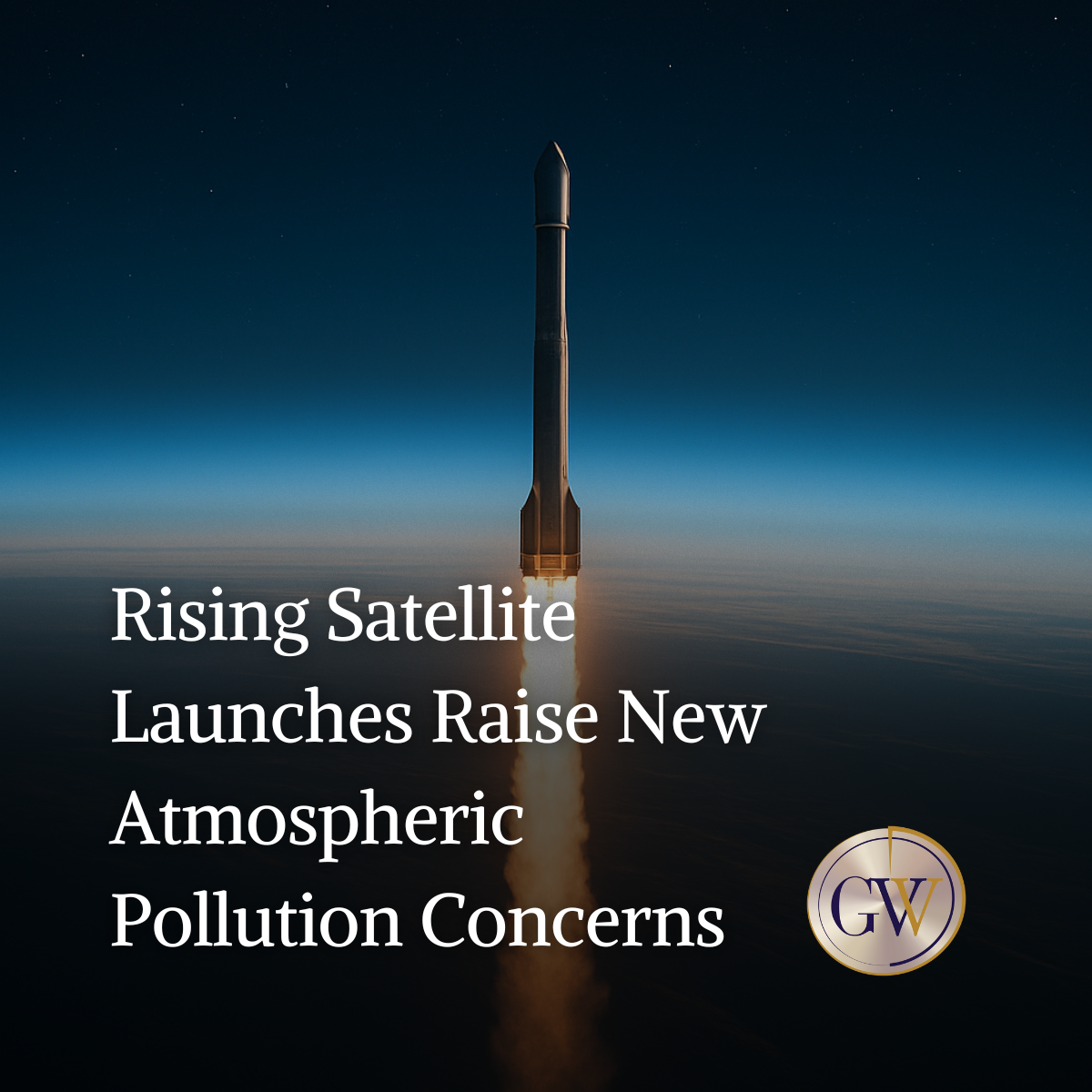
Scientists Warn of Atmospheric Risks from Surging Satellite Reentries
A new scientific assessment warns that the rapid expansion of satellites in low-Earth orbit is creating an overlooked environmental challenge: pollution of the upper atmosphere from rocket launches and the burn-up of satellites as they reenter. With more than 12,000 active satellites today — up from roughly 1,200 a decade ago — and tens of thousands more planned, researchers say the cumulative impact is no longer negligible.
When satellites and spent rocket stages reenter the atmosphere, they vaporize and release metal-oxide particles, including aluminum, silicon, copper, and lithium. These aerosols can remain suspended in the stratosphere for decades, raising concerns about potential effects on the ozone layer, atmospheric chemistry, and long-term climate stability. One satellite weighing just a few hundred pounds can generate dozens of pounds of aluminum-oxide nanoparticles during reentry, according to estimates referenced in the report.
Launch activity is also increasing emissions of black carbon and other combustion byproducts into the upper atmosphere. Scientists caution that these combined impacts may soon rival or exceed natural meteoroid inputs — historically considered the main source of metallic particles at high altitudes.
Despite the scale of the issue, data gaps remain significant. Researchers are pushing for improved monitoring, high-altitude sampling missions, and more comprehensive modeling to better understand how upper-atmosphere pollution might influence climate, ozone recovery, and global environmental systems.
For policymakers and businesses, the findings highlight a new environmental frontier. As the commercial space sector grows and satellite constellations become essential digital infrastructure, regulators may face pressure to introduce sustainability standards for launches, satellite design, and reentry practices. For investors and companies with exposure to space-based services, these emerging risks underscore the need to anticipate future regulation, evaluate environmental externalities, and consider sustainable alternatives within the expanding space economy.