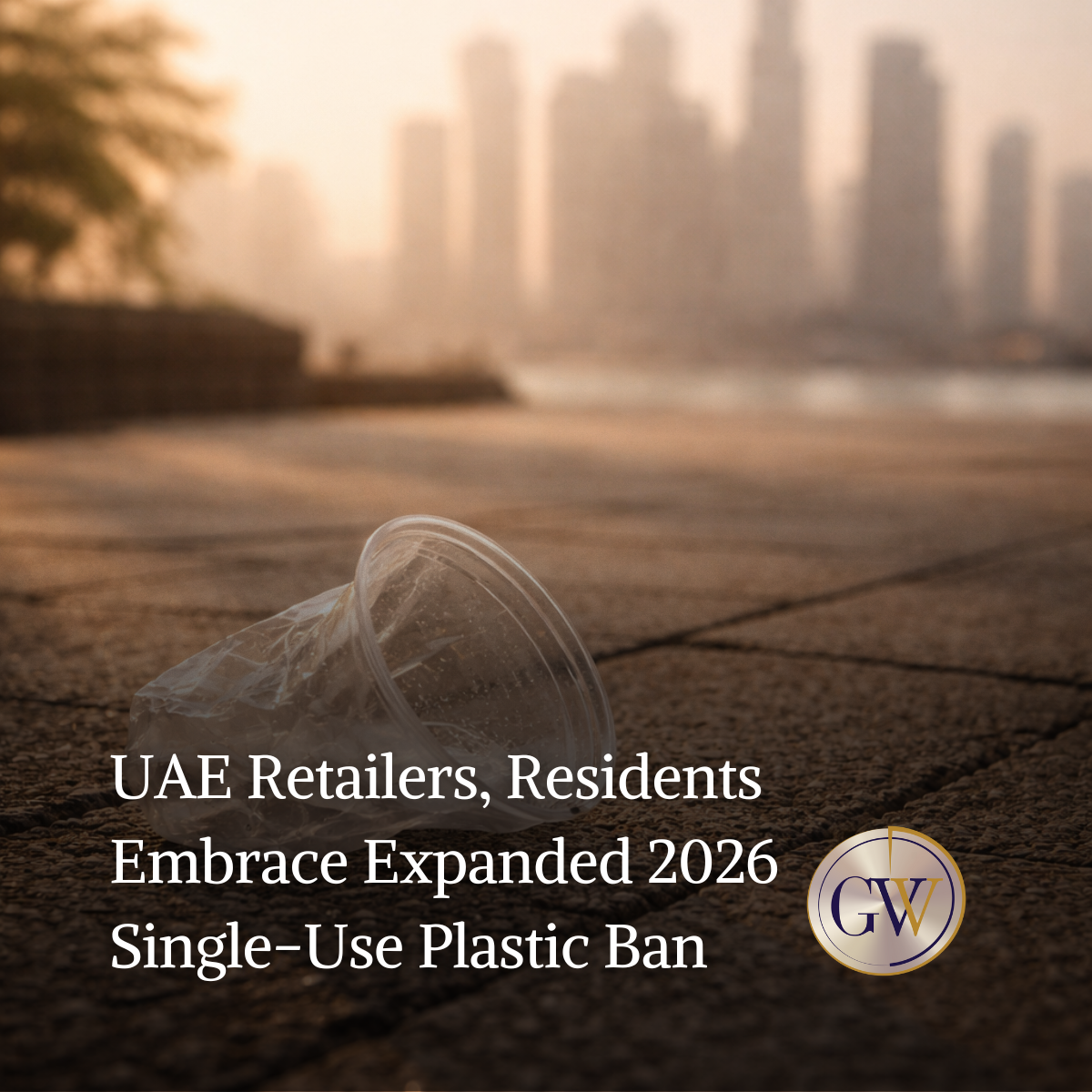
The United Arab Emirates’ expanded ban on single-use plastics, effective January 1, 2026, is seeing broad adoption across retailers, manufacturers and residents, underscoring growing alignment with the country’s sustainability agenda.
Implemented under Ministerial Decision No. 380 of 2022 by the Ministry of Climate Change and Environment (MOCCAE), the second phase of the ban prohibits the import, manufacture and trade of a wide range of disposable plastic products. These include beverage cups and lids, cutlery, plates, straws, stirrers and Styrofoam food containers, extending earlier nationwide restrictions on single-use plastic bags.
Retail and supply chains have largely transitioned without disruption. Major operators report that early preparation, supplier engagement and consumer education eased the shift toward compliant alternatives. Retailers such as LuLu Group have removed banned products from shelves while expanding offerings of reusable and recyclable materials, including paper, jute and recycled-content packaging.
Manufacturers have also adapted ahead of enforcement. Companies including Hotpack Global have adjusted production lines toward fibre-based, recycled and alternative materials, reflecting broader investment in sustainable packaging innovation while maintaining supply continuity.
Consumer response has been broadly positive. Residents have increasingly adopted reusable bags and containers, supported by awareness campaigns and in-store initiatives that frame sustainability as a shared responsibility rather than a regulatory burden.
Strategically, the expanded ban forms part of the UAE’s longer-term effort to reduce waste generation, protect ecosystems and advance a circular economy. By shifting market norms away from disposability, policymakers aim to embed sustainability more deeply into both consumer behaviour and commercial practice.
As implementation continues, coordination between government, retailers and manufacturers will remain central. Early adopters now appear well positioned in a regulatory environment where sustainability is moving from policy objective to operational expectation.